Psychedelics in Recovery™




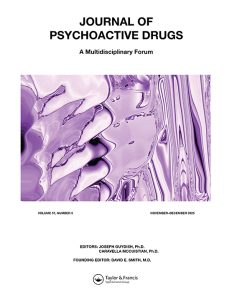
In November 2025, a peer-reviewed article was published in the Journal of Psychoactive Drugs examining a phenomenon that many in our community have been living for years: the intentional integration of psychedelic experiences with 12-Step recovery. Titled “Psychedelic Augmentation of 12-Step Engagement: A Novel, Accessible Approach to Enhance Community-Based Recovery from Substance Use Disorders,” the study represents one of the first empirical efforts to document this emerging practice in real-world settings.
Importantly, this research did not emerge in a vacuum. Participants were intentionally recruited through a community partner with lived experience—members connected to Psychedelics in Recovery™ and adjacent 12-Step networks—underscoring a central truth: much of the innovation in recovery is happening outside of clinics, ahead of formal systems, and in response to unmet needs.
Why This Study Matters
The study was small by design. Due to federal research constraints, the final sample included eight individuals in remission from alcohol, opioid, and/or stimulant use disorders. The authors are explicit that the findings are exploratory and not generalizable. But what the study lacks in scale, it makes up for in depth.
Participants described using psychedelics such as psilocybin, ayahuasca, ibogaine, peyote, and others in conjunction with—not instead of—12-Step engagement. All had prior exposure to 12-Step programs. For some, psychedelics helped them finally engage with the Steps after repeated failed attempts. For others, they addressed persistent psychological distress that lingered despite long-term abstinence and diligent program participation.
This distinction matters. The study does not frame psychedelics as a shortcut or replacement for recovery work. Rather, participants consistently emphasized that psychedelics were most helpful when embedded within an existing framework of accountability, integration, and ongoing peer support.
Psychedelics as a Catalyst, Not the Container
One of the most compelling findings was how participants described the synergy between psychedelic experiences and specific 12-Step practices. Psychedelics appeared to facilitate openness to Step 2 (belief in a Higher Power), deepen moral inventory work in Step 4, and enrich contemplative practices aligned with Step 11. Several participants used vivid metaphors: psychedelics as the “engine,” the Steps as the “transmission.”
Equally important, participants were clear about what didn’t work. Prior recreational psychedelic use—absent structure, intention, or integration—was largely described as ineffective for recovery. Frequent or poorly integrated use was seen as destabilizing and, in some cases, as reinforcing addictive patterns. In other words, “set and setting” extended beyond the ceremony itself to include one’s recovery community, living situation, and psychological readiness.
Accessibility and Equity
A central theme in the paper is accessibility. Half of the participants were uninsured. Many contrasted the relative affordability of community-based approaches with the high cost of emerging psychedelic-assisted therapies. Twelve-Step programs, for all their imperfections, remain free, ubiquitous, and lifelong. For participants in this study, that infrastructure provided something clinical models often cannot: continuity.
This is a crucial equity consideration. As psychedelic medicine becomes increasingly medicalized and commercialized, community-based models—however imperfect—may remain the only viable option for many people. The study does not argue that this is ideal. It argues that it is real.
Risks, Tensions, and Honesty
The authors do not minimize risk. Participants reported challenging psychological experiences, one case of transient psychosis following unsupervised high-dose use, and instances of psychedelic misuse—particularly with non-classic substances like MDMA. Tensions with abstinence-oriented norms were also acknowledged. Most participants avoided discussing psychedelic use in traditional 12-Step meetings, relying instead on alternative spaces such as PIR® for honest dialogue.
This mirrors long-standing dynamics around medications for opioid use disorder and highlights a broader truth: recovery is relational. Stigma, secrecy, and fear of exclusion can themselves become risk factors.
Where PIR® Fits In
Psychedelics in Recovery™ did not set out to prove a model. PIR® emerged to meet people where they already were—navigating recovery, curiosity, skepticism, hope, and risk in equal measure. This study validates that community-based wisdom deserves careful attention, not dismissal or romanticization.
The findings do not offer simple answers. They offer something more valuable: grounded questions for future research, policy, and community practice. How can integration be supported? Who is most at risk? What safeguards matter most outside clinical settings? And how do we honor both recovery principles and evolving therapeutic landscapes?
As the authors conclude, further research is urgently needed. PIR® is proud to have contributed—carefully, ethically, and transparently—to that ongoing conversation.